

Project 1961 is the award-winning creative studio behind the critically acclaimed feature film Grand Theft Hamlet (SXSW Jury Award, BIFA, Grierson)
We make films - documentary, fiction & hybrid - and live performances that explore the boundaries between real & virtual, digital & analogue, ancient & modern. Our work reflects the beautiful, strange and funny ways that we exist as humans in today's complex world.
The company was founded in 2016 by Julia Ton, whose focus on international cross-border collaboration and creative risk-taking remains a cornerstone of our practice.

Today, Project 1961 is led by Pinny Grylls and Sam Crane
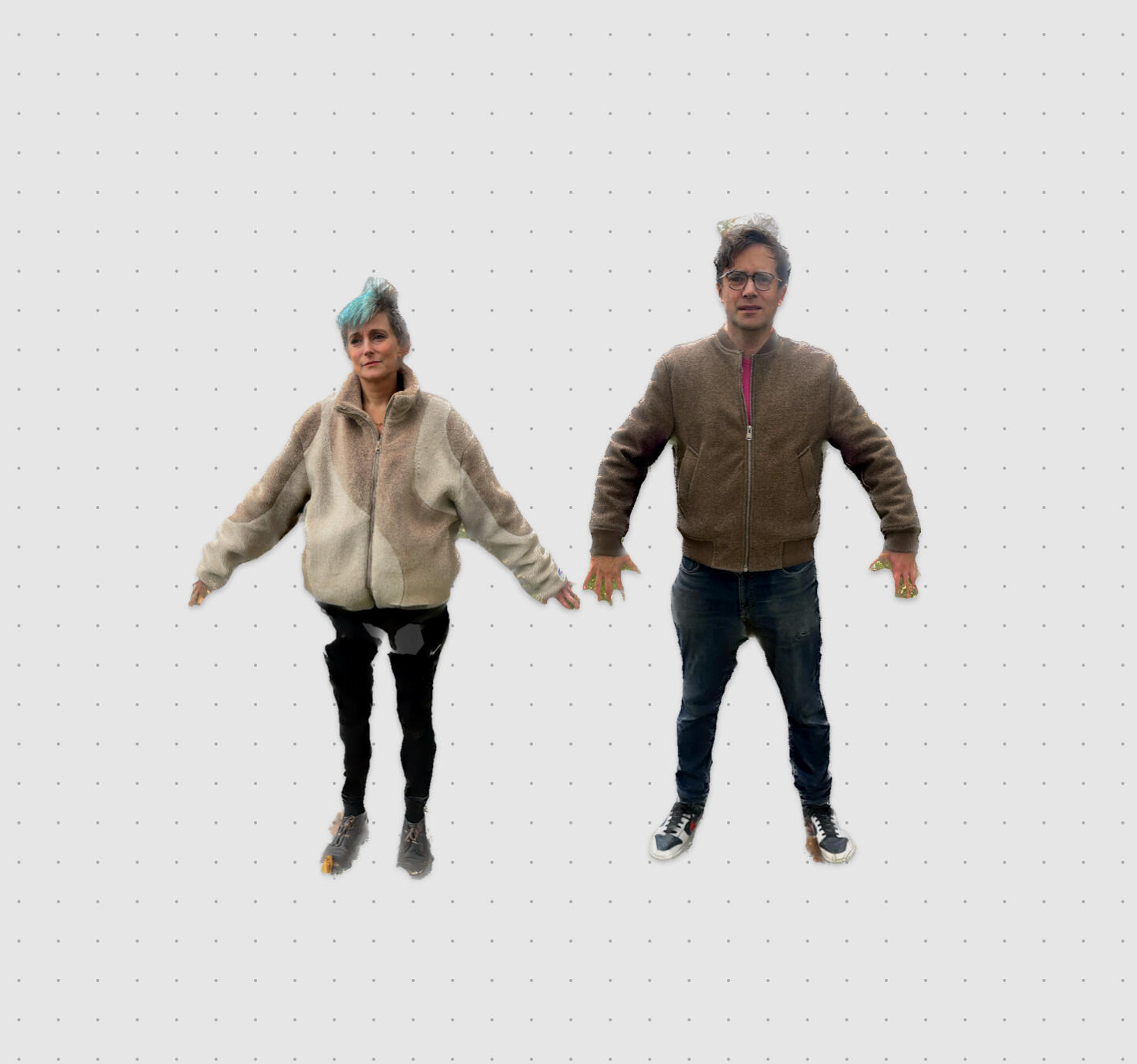
Pinny is a 2025 BAFTA Breakthrough artist and winner of the BFI Chanel Filmmaker Award for Creative Audacity for Grand Theft Hamlet. Working across documentary, theatre and ethnography, she is known for formally adventurous films about performance and human connection, and is a proud deaf filmmaker and British Sign Language user
Sam is a BIFA-winning filmmaker and actor (NT, Globe, West End) whose work pioneers the collision of classical performance and digital culture. A PhD candidate at the University of York, he is a leading researcher in hybrid theatrical methodology — investigating how human presence and performance are transformed across real and virtual spaces.
Pinny and Sam are represented by Anonymous Content



“A brilliant idea, brilliantly executed...Genuinely exciting” ★★★★★ Peter Bradshaw, The Guardian
“A crucible in which the solid forms of film, theatre, and video games have been stirred until they melt” Anthony Lane, The New Yorker

How Sam Crane and Pinny Grylls Merged the Worlds of Shakespeare and Grand Theft Auto

“There Was a Fair Amount of Us All Killing Each Other”: Sam Crane and Pinny Grylls on Grand Theft Hamlet
"An unexpectedly moving, genuinely quite revolutionary tribute to art's endurance and importance in times of crisis" ★★★★ Empire
"Wildly entertaining" The Face
"An extraordinary piece of art to hold onto and cherish for years to come" The People's Movies



In 1961, theatre director Joan Littlewood and architect Cedric Price conceived a radical vision to dismantle cultural gatekeeping by fusing cutting-edge technology with raw creativity: The Fun Palace.
It was a defiant rejection of traditional, static institutions - spaces where people, in Littlewood’s words, “escape up their own assholes in the dark.” Instead, they imagined a “university of the streets”: a building designed as a constantly changing matrix wired with the latest information technology.
At Project 1961, we exist to realize this "technological playground." We believe that merging culture with technology is a vital tool for dismantling elitism, taking storytelling out of intimidating, "pre-packaged" cultural spaces and moving it into the digital and physical landscapes where people actually live. By utilizing contemporary infrastructures, we bypass the gatekeeping of "high art" in favor of something more volatile, inclusive, and alive.
Our work, exemplified by the feature film Grand Theft Hamlet, treats modern technology as the "constantly changing matrix" Price envisioned. Whether we are staging Shakespeare within a hyper-violent gaming sandbox or exploring new digital frontiers, we are committed to the collision of technology and the everyday, ensuring culture remains a site of active, rowdy, and universal engagement.
